Our Approach
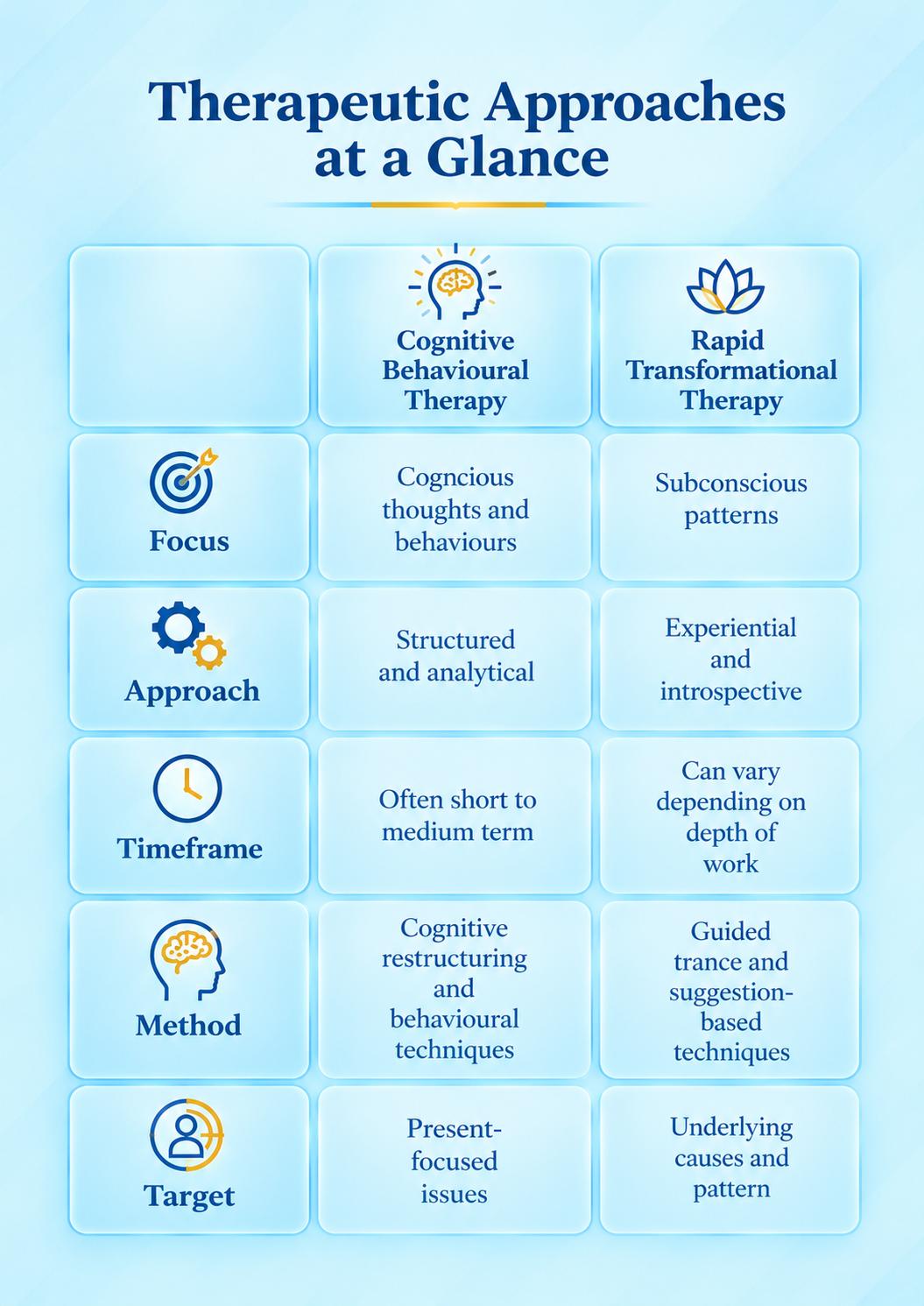
We provide specialised therapeutic intervention combining Rapid Transformational Therapy (RTT) and Cognitive Behavioural Therapy (CBT) techniques and tools. CBT and RTT (hypnotherapy) combined approach allows for both conscious and subconscious processes to be addressed simultaneously. This can enhance effectiveness and support long-term outcomes.
Research found that hypnosis (RTT) could enhance the effectiveness of cognitive behavioral therapy (CBT). An updated meta-analysis showed that when the two were combined, they had a small-to-medium, but statistically significant, advantage over CBT alone for managing depression or pain (Ramondo, N., et al, International Journal of Clinical and Experimental Hypnosis, Vol. 69, No. 2, 2021).
Cognitive Behavioural Therapy (CBT)
What is CBT?
Cognitive Behavioural Therapy (CBT) is a short-term, evidence-based therapeutic approach that helps individuals identify and change unhelpful thinking patterns, emotional responses, and behaviours.
CBT sessions focus on helping parents recognise unhelpful thinking styles that may contribute to poor decision-making, emotional distress, or behaviours that place strain on family relationships.
Through structured cognitive work, parents are supported to develop more balanced perspectives, improve emotional regulation, and consider alternative ways of responding to challenging situations.
Behavioural work provides opportunities to practise new strategies in everyday life, helping parents experience more helpful ways of managing relationships, boundaries, conflict, and parenting responsibilities.
The work may also support parents experiencing anxiety, low mood, anger, dependency, difficulty setting boundaries, or challenges in prioritising their children's needs.
Rapid Transformational Therapy (RTT)
What is RTT?
Rapid Transformational Therapy (RTT) is a focused therapeutic approach that draws on techniques from hypnotherapy, psychotherapy and cognitive behavioural approaches to help individuals explore and change unhelpful beliefs, emotional responses and behavioural patterns.
RTT sessions can help parents identify how earlier experiences, deeply held beliefs and automatic responses may influence their current choices, relationships and ability to respond safely and consistently to their children's needs.
Through guided therapeutic work, parents are supported to develop insight into the underlying emotional barriers that may affect motivation, trust, engagement with professionals or readiness for change. The approach aims to strengthen more helpful beliefs and responses so that parents can take part more effectively in the wider intervention.
Within this service, RTT is combined with CBT techniques and practical between-session tasks as part of a tailored programme that typically runs for 12 weeks. RTT can help address deeper beliefs and emotional drivers, while CBT supports parents to test new perspectives, practise different behaviours and embed change in everyday life within the timescales of PLO or public law proceedings.
For example, the work may explore beliefs such as “I cannot trust professionals”, “I will always fail” or “conflict is the only way to be heard”. Parents may then be supported to develop calmer responses, communicate more constructively, set safer boundaries, manage anger or anxiety, and remain focused on their children's needs during difficult conversations and decisions. The work is therapeutic support rather than a parenting or risk assessment, and it complements—not replaces—the responsibilities of children's services and the court.
Case Study: Ms M
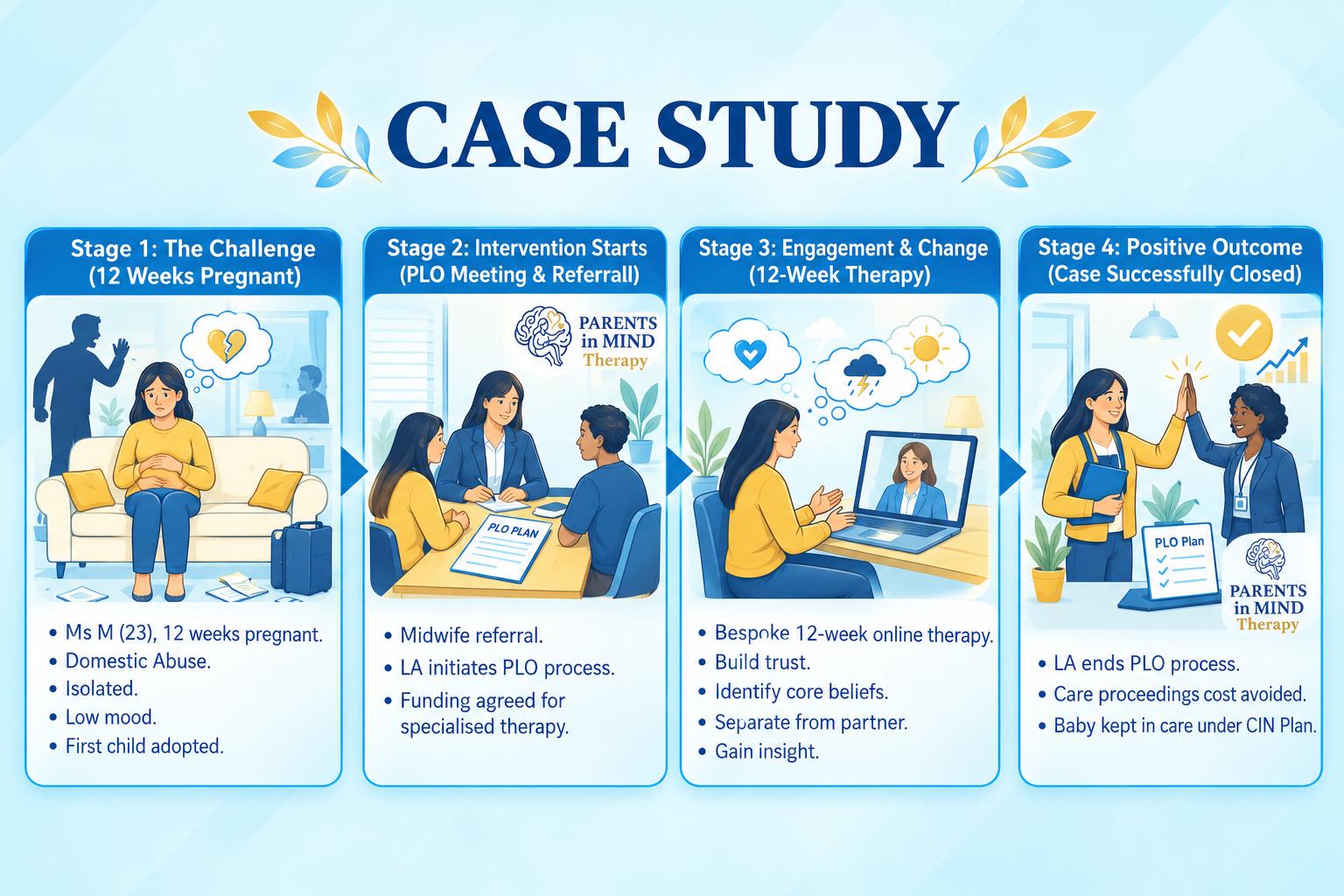
Background & Presenting Issues: Ms M is a 23-year-old mother and care leaver with a history of adverse childhood experiences (ACEs). She presents with low mood and anxiety. Recently, her two children were removed from her care by the Local Authority due to ongoing concerns regarding her ability to recognise risk and protect them from the harm of domestic abuse. Despite a significant domestic abuse incident that triggered child protection proceedings, Ms M remains in a relationship with the preparator.
Limitations of Previous Support: Prior to court proceedings, Ms M engaged with practical parenting support and completed the Freedom Programme. However, these interventions failed to improve her parenting capacity or increase her insight into domestic abuse risks. While these standard services engaged her on a logical and practical level, they did not address her deep-seated trauma or core emotional needs. Without trauma-informed intervention, practical guidance alone is often insufficient to drive meaningful behavioral change.
Proposed Service Intervention: A psychological rule of the mind is that emotions are always stronger than logic. This means we are driven by emotions rather than the facts. We intent to work with parents on a psychological level to reframe their experiences so that it alters their emotions and therefore their behaviours, resulting in change.
If referred to our service, Ms M’s intervention would begin by addressing her underlying trauma and core beliefs. By establishing a therapeutic alliance with Ms M, enabling her to process her own trauma, and help her to recognise and address her own past experiences in relation to her values and vulnerability. She discovers her limiting beliefs about “not being good enough”, “being unloved” and “unable to cope on her own”, etc which have kept her in the abusive relationship. She is then helped to reframe her experience and create new core beliefs that cultivate positive self-esteem and confidence. With the use of cognitive tools and practical strategies, Ms M becomes able to meet her own emotional and psychological needs.The newfound positive core beliefs are repeated and reinforced to enable Ms M to understand risk, reconsider her relationship and work toward the safe reunification with her children.
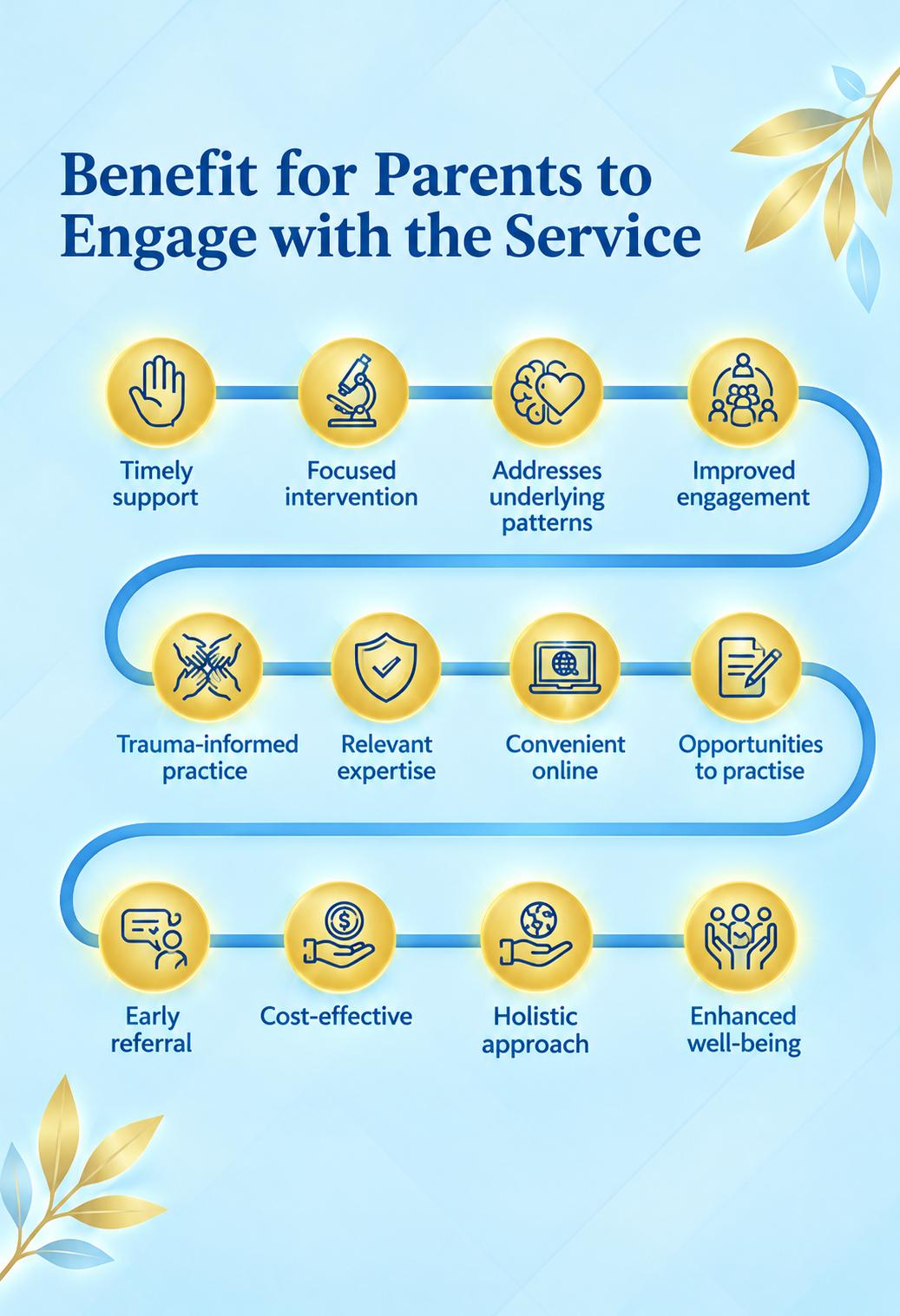
Benefits for parents
Timely support within court timescales: The 12-week programme helps parents make changes during PLO or public law proceedings, giving them time to demonstrate progress before proceedings conclude.
Focused, tailored intervention: Support is tailored to each parent's needs, circumstances and barriers to progress, with the aim of improving outcomes at the end of proceedings.
Addresses underlying patterns: Unlike standard parenting classes that focus primarily on behaviour, the programme targets the psychological, emotional, cognitive and behavioural patterns that can hinder lasting change.
Improved engagement: Parents are supported to develop insight, motivation and more constructive responses, which may help them participate more effectively in proceedings.
Strong therapeutic alliance: Working with independent therapists might increase parental engagement and support positive change.
Trauma-informed practice: The service offers a relationship-based, non-judgemental approach with safeguarding embedded throughout.
Relevant professional expertise: Therapists are qualified social workers with experience of children's services, child protection,care proceedings, Cafcass and the NHS.
Convenient online delivery: Weekly remote sessions reduce travel demands, support regular attendance and help parents complete the full programme.
Opportunities to practise change: Agreed tasks between sessions help parents apply new strategies in everyday life and work towards sustaining progress.
Early referral opportunity: Referring at the PLO meeting or initial court hearing can give parents more time to engage with support and demonstrate progress by the end of the care proceedings.
Post-proceedings support can help prevent placement breakdown: Without appropriate support, families face a greater risk of disrupted placements and repeat proceedings, causing further instability for parents and children and increasing costs for the local authority.
Cost-effective: Providing support earlier in proceedings may reduce the need for unnecessary multiple assessments and residential placements during proceedings and lower the local authority's long-term costs if children are able to remain in parents' care due to the changes they have made.