Our Mission
Parents in Mind Therapy bridges critical gaps in care proceedings by helping parents process untreated past trauma and psychological difficulties that impact their present functioning and parenting capacity. The support is designed to strengthening internal thoughts processes, which could lead to positive outcomes that enable families to stay together safely.
Understanding the Gap
The challenge in care proceedings
The majority of parents involved in public law proceedings have a negative experience. They often experience high levels of anxiety, stress, emotional pain, anger, depression and sadness to name a few.
Once proceedings begin, many feel judged, criticised, isolated and with limited, to no support. With the additional, real fear of losing their children permanently these factors are unlikely to create an environment in which meaningful change is possible.
If parents were unable to make the required changes before proceedings, many will find it nearly impossible to make changes during the court process due to the unsupportive environment and intense emotions.
During public law proceedings, support for parents is limited, delayed, or generic. Universal services, such as parenting groups, may not be tailored to parents'' individual needs, circumstances, or the issues raised in proceedings. NHS Talking Therapies often involve waiting lists and usually focus on mental health difficulties rather than parental wellbeing, safeguarding issues, or the specific timescales of court proceedings. As a result, parents often do not receive the focused interventions needed to enable meaningful change within the court timetable.
Generic services often focus on basic, practical parenting skills and may not address the deeper psychological, cognitive and behavioural patterns that are needed for lasting change.
In addition, when parents face urgent day-to-day pressure they may have little opportunity to engage in therapy or prioritise their emotional and mental health needs.
Some parents struggle to change because their past trauma and unmet psychological needs remain unchanged. The dysfunctional patterns that are present before proceedings, often continue during proceedings even when practical parenting advice is provided. Without processing the parents' trauma and psychological needs, their conscious and unconscious thinking patterns, habits, and emotional drivers behind their behaviour remain. Change or lasting change is highly unlikely.
Lengthy and demanding proceedings can reduce parents' motivation. High pressure, low confidence, and limited support may lead to disengagement, increasing the risk of poorer outcomes.
Some parents may not be ready to change at the start of proceedings however the urgency for change is paramount. Targeted support may enable parents to move from pre-contemplation towards contemplation and meaningful change, improving the likelihood of better outcomes for children and families.
Relationship-based practice between parents and social workers is one of the most effective ways to promote change. However, mistrust during care proceedings can undermine this approach.
Socioeconomic deprivation (low income, debt, living in poverty, domestic abuse) has been linked to mental health difficulties. Most psychological assessments completed during care proceedings indicate that therapeutic intervention is required, but often falls outside court timescales and support is therefore not offered. Providing therapeutic support prior or during proceedings might have a positive impact.
Reunification. Even when reunification is possible, parents may not receive the right support, this increases the risk of placement breakdown and repeat proceedings. This creates further instability for parents and children and adds costs for the local authority.
Even when parents want to change, past trauma, adverse childhood experiences (ACEs) and current living situation can create barriers that make sustained progress difficult.
Studies consistently show that a significant majority of parents facing child removal have histories of severe adverse childhood experiences (ACEs), domestic abuse, sexual assault, or systemic poverty. Unresolved trauma can affect emotional regulation, stress responses, decision making, understanding of risk and ability to protect and provide safe and stable care and interpersonal functioning. Mental health difficulties or complex PTSD can impair a parent's capacity in specific ways, such as making it harder to stay emotionally regulated when children display challenging behaviours, understand risks or provide stable and safe home environments.
Many parents do not seek to address their psychological difficulties and past trauma for a variety of reasons or only seek support when in crisis, but often immediate support is unavailable, and they are put on waiting lists. By the time support is available, the crisis has passed and parents are no longer motivated to address the difficulties, and they have returned to dealing with daily stressors and pressures, until the next crisis occurs.
Why does this happen?
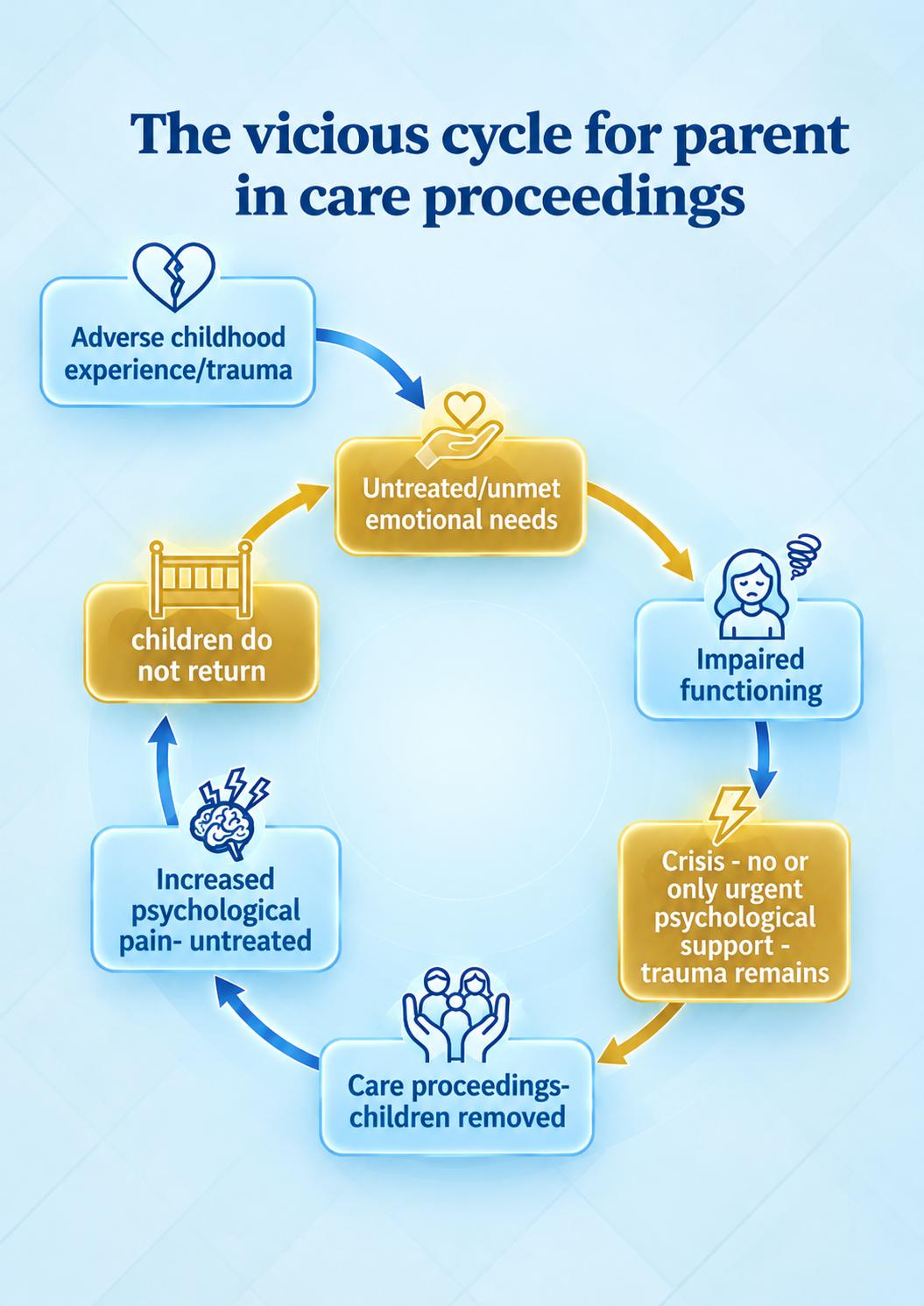
Parents often fall through the cracks between service gaps because they are rarely treated as a priority. Social care rightly focuses on the safety and well-being of children, while mental health services prioritise individuals in immediate, high-risk crises. However, for parents who have experienced adverse childhood experiences (ACEs) or trauma, their emotional needs are often chronic rather than acute. Because their distress is not considered an immediate risk, it frequently goes untreated.
While parents may receive short-term intervention during a mental health crisis, this emergency response fails to address the underlying trauma. Once the immediate crisis passes, parents are left back at square one, waiting for the next breakdown to occur.
This traps parents in a damaging, recurring cycle: Untreated trauma leads to impaired functioning, including substance misuse, domestic abuse, and neglect, which inevitably impacts their parenting. Yet unless parents can self-advocate, there is little proactive help available.
Ultimately, when these parents enter care proceedings, their chances of a positive outcome are significantly lower. The support offered prior and during proceedings typically targets surface-level behaviours (such as parenting skills) without ever treating the deep-seated trauma causing those challenges.
The Gap in Current Provision
When parents experience a crisis driven by current stressors or untreated trauma, they are typically referred to NHS mental health services. However, these services often involve long waiting lists, therefore support is not given in a timely manner, during which time the impact on parenting capacity remains significant. While social care provides practical parenting support, it rarely addresses the underlying root causes of parenting difficulties, such as unprocessed trauma and adverse childhood experiences. Often these factors are assessed as the obstacles for change, but left untreated. Without adequate support, parenting capacity diminishes, frequently leading to formal care proceedings. Once in proceedings, access to therapeutic support becomes urgent, yet unavailable and systemic services rarely provide support during proceedings, the support is not tailored to parents' needs in proceedings or provided without delay.
Ultimately, parents fall into a critical gap between services: social care cannot deliver psychological support that directly targets parental well-being that impacts parenting capacity, while health services focus on general mental health without addressing parenting difficulties. Furthermore, long-term psychotherapy remains exceptionally difficult to access due to limited NHS resources.
Most care proceedings focus on risk assessment and historical deficits rather than therapeutic rehabilitation. Without proactive, trauma-informed support early on, parents struggle to meet the high threshold of change demanded by the court. Furthermore, research notes that parents struggling with deep-seated trauma, mental health crises, or substance misuse rarely have enough time within a 26-week window to demonstrate safe, sustained recovery.
Case chronologies often present dated accounts of historical support services provided to parents on a repeated basis, but with seemingly little to no positive change. We observed that within case chronologies, there is a distinct lack of therapeutic support often in contradiction with the high level of practical and group parenting support offered. Most parenting support services focus on practical strategies while overlooking parents' emotional needs and trauma. While these services attempt to drive change through logic, parents with unprocessed trauma operate primarily on an emotional level. As a result, even when parents understand logical advice, they cannot truly engage with it or sustain real change through these programs. This is a shortcoming in services which Parents in Mind Therapy aims to address.
Our therapeutic support can be accessed immediately prior to or as soon as proceedings are issued. Designed as an intense short-term support, 12-week intervention, meeting on a weekly basis to keep parents focused. It gives parents the opportunity, time and tools to demonstrate meaningful change during the proceedings and potentially sustain those changes long into the future. The uniqueness of our service lies in combining two complementary therapeutic modalities: one addressing underlying emotional patterns and past trauma, and the other supporting positive shifts in parent thinking and behaviour, both having positive impact on parenting capacity.
Parents in proceedings are disadvantage. This is supported by The annual Department for Education (DFE) report that less than 30% of children return to parents' care at the end of proceedings.
Data from the Universities of Lancaster and Oxford indicates care proceedings for babies have risen by 64% over the past two decades, with one in 118 infants affected. Experts have claimed that many babies may not have needed to go into care if support had been in place. Data concerning recurrent care proceedings highlights that very low percentages of babies involved in first repeat proceedings are successfully returned to parents' care, often hovering below 15% to 20% in high-risk or subsequent proceedings.
Research from the Nuffield Family Justice Observatory (NFJO) consistently shows that providing early, intensive support to birth mothers - especially those facing repeat care proceedings - is critical to safely reducing the number of children entering the care system.
This not only have a significant financial impact on public services, but the impact can be seen long-term. Negative outcomes often result in parents' remaining unchanged, dependant on public services and if they have future children, they are likely to repeat the same dysfunctional pattern that may lead to future proceedings.
Support Aims and Objectives
Aim:
To bridge the gap in care proceedings, by providing tailored short-term therapeutic intervention for parents involved in PLO/public law proceedings in a timely manner prior or early in the proceedings, to improve outcomes for children and keeping families together.
To make proceedings fairer for parents and increase parents' chances to make positive change to keep children in their care.
To make parents feel valued, seen and heard during proceedings with the aim of allowing them to continue with life whatever the outcome is. This is particularly necessary when children are not returned to their care, to prevent their dependency on public service.
Objectives:
Providing a psychologically safe environment for growth and change, by developing a therapeutic alliance with parents. Utilising Rapid Transformational Therapy (RTT) and Cognitive Behavioural Therapy (CBT) techniques and tools to process past trauma and address underlying route causes and unmet psychological needs and addressing cognitive and behavioural patterns which are obstacles to change in a timely manner at an early stage of proceedings.
Providing individual therapeutic person-centred intervention addressing parent's psychological needs to instigate potential meaningful change.
The Solution
Our Values
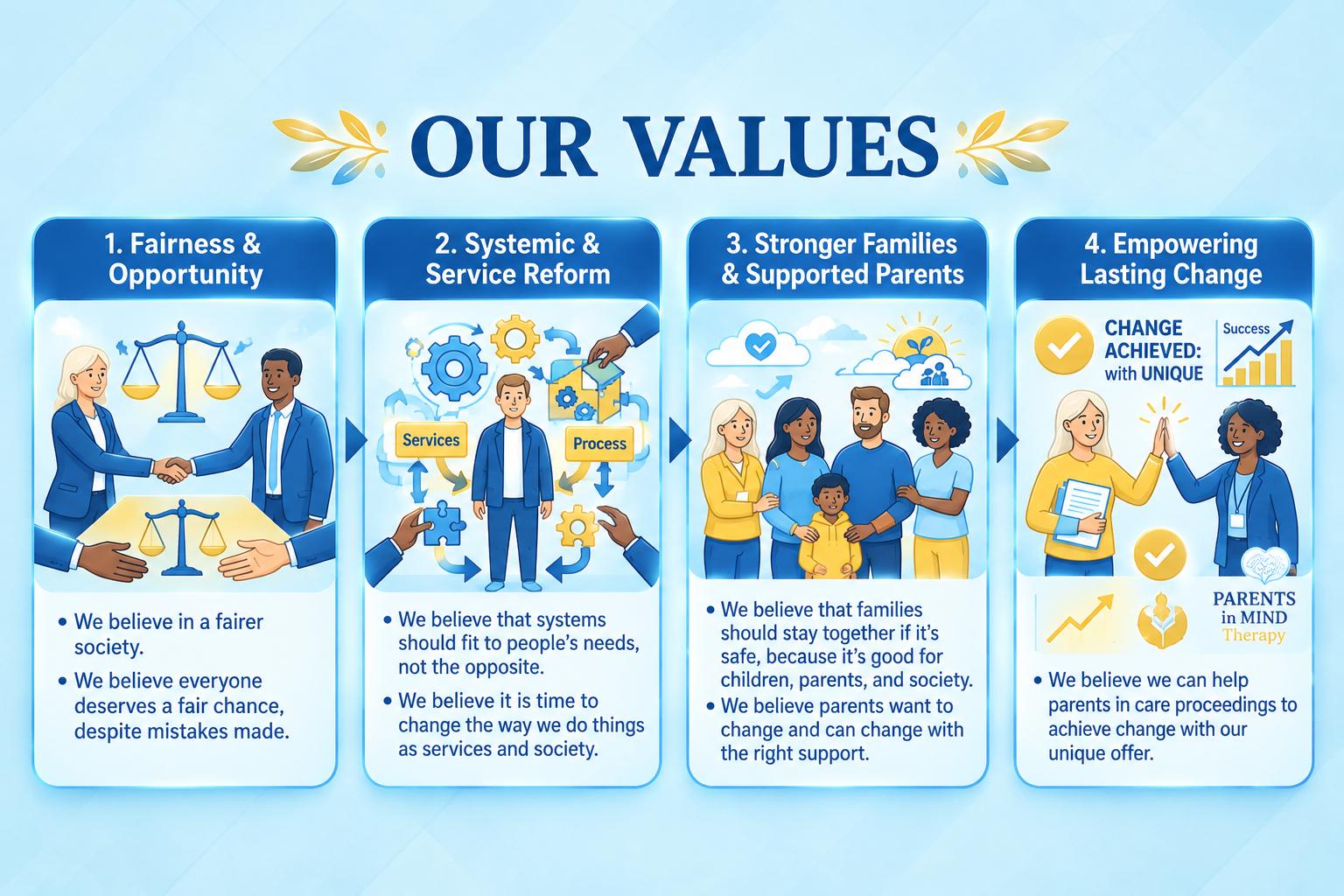
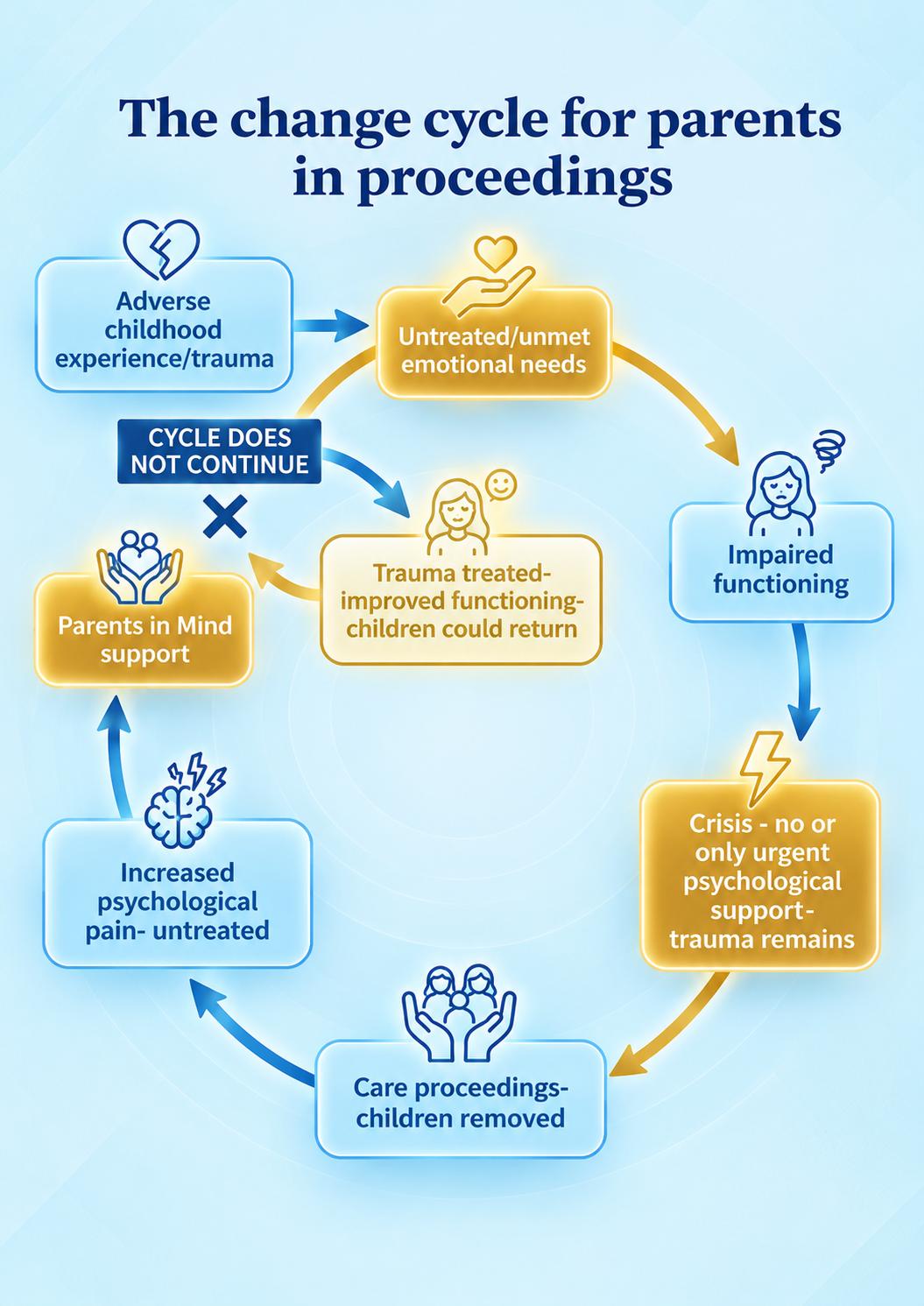
We believe in fairer society.
We believe everyone deserves a fair chance, despite mistakes made.
We believe that systems should fit to people's needs not the opposite.
We believe that families should stay together if it's safe because it's good for children, parents and society.
We believe parents want to change and can change with the right support.
We believe it is time to change the way we do things as services and society.
We believe we can help parents in care proceedings to achieve change with our unique offer.